
Komatsu Excavator Troubleshooting: Step-by-Step Diagnostic Guide
A 10-year field technician shares a systematic guide to diagnosing Komatsu excavator hydraulic issues, pilot pressure faults, main pressure losses, and PC/LS pump control errors.

After more than a decade in the heavy machinery repair industry—progressing from a green apprentice to a seasoned field technician—I’ve learned one fundamental truth: nothing in this trade comes easy.
One of the biggest frustrations for machine owners and mechanics alike is improper diagnosis. It is all too common to see owners spend thousands of dollars replacing parts, only to find the original problem remains. A classic example is replacing a system-wide main relief valve to fix a single-function cylinder drift (arm dropping)—a fundamental mismatch between the symptom and the solution.
To prevent costly guesswork, I have structured my years of field experience into a systematic diagnostic workflow for Komatsu excavators suffering from low hydraulic power, slow movements, engine stalling, or heavy black smoke.

The Core Philosophy: "Watch the Engine First"
Before hooking up pressure gauges or pulling valves, always observe how the engine behaves under load:
- Engine runs free with no load (unburdened): You can instantly rule out engine output issues. Focus your diagnosis entirely on hydraulic pilot control and pump displacement.
- Engine bogs down, drops RPM, or emits black smoke: The engine is producing power, but the hydraulic pump is absorbing too much power (overloading). Shift your focus toward the pump control system (PC/LS valves, servo pistons, or solenoid valves stuck in maximum displacement).
Step 1: Measure Pilot Primary Pressure (The Root of Control)
Pilot pressure is the mechanical "hand" that shifts the main control valve spools. If primary pilot pressure is insufficient, the main spools will not open completely. This restricts main oil flow, resulting in a machine that is overall weak, sluggish, or completely unresponsive.
1.Test Primary Pilot Pressure:Standard Range: 3.8 to 4.5 MPa。
Connect a hydraulic pressure gauge to the primary pilot pressure test port. On most Komatsu excavators, standard primary pilot pressure should read between 3.8 and 4.5 MPa at high idle (refer to your specific model shop manual).
2.Inspect the Self-Reducing Valve (Prs Valve):Key Component Failure。
If primary pilot pressure is low, inspect the pilot pump for volumetric wear, and check the Self-Reducing Valve for a sticking spool or a fatigued/broken internal spring.
3.Verify Secondary Pilot Pressure:Pilot Output Check。
Stroke the joystick or foot pedal to its limit and measure secondary pilot pressure leading to the main control valve. If primary pressure is normal but secondary pressure drops, the pilot PPC valve or foot pedal spool is worn or leaking internally.

Step 2: Test Main Hydraulic Pressure (Flow vs. Pressure)
Standard Testing Conditions: Engine at full throttle (P-Mode), hydraulic oil at normal operating temperature (50–60 °C), and coolant at standard operating temperature.
Scenario A: Main Pressure is Normal (Reaches 32–35 MPa)
If main pressure reaches factory specifications during relief, the primary oil passages and main seals are intact (no severe internal bypass). The loss of speed or power is caused by insufficient hydraulic flow.
- Root Cause: The main pump variable displacement mechanism is stuck in a minimum displacement (low-flow) position.
- Inspection Checklist:
- Solenoid Valves & Circuits: Check output voltage, coil resistance, and mechanical spool clearance on the PC-EPC and LS-EPC solenoids.
- Pump Control Valves (PC / LS Valves): Check for contamination, metal debris, or binding in the PC/LS valve spools and control springs.
- Servo Piston: Inspect the main pump servo piston for mechanical binding or degraded piston seals causing internal bypass.
Scenario B: Main Pressure is Low (Fails to Reach Relief Pressure)
When the system cannot build pressure, hydraulic oil is bypassing internally. To locate the leak efficiently without replacing random parts, distinguish between systemic faults and branch circuit faults.
Step 3: Differentiate "Common System" vs. "Branch Circuit" Faults
| Diagnostic Category | Symptom Pattern | Logical Analysis | Target Components to Inspect |
| Common System Fault | All machine functions are simultaneously weak or slow. | The failure must reside in a core component shared by all hydraulic circuits. | • Main Relief Valve (worn seat, weak spring, or stuck spool) • Unload Valve • Main Pump Assembly (excessive clearance between valve plate and cylinder block) |
| Branch Circuit Fault | Only one specific function is slow/weak, or a single cylinder drifts (e.g., boom or arm dropping). | Rule out the main relief valve and shared pump components entirely. Focus strictly on that circuit. | • Secondary Pilot Pressure for that function • Main Control Valve Spool binding/wear • Overload Port Relief Valve (circuit safety valve) leaking • Cylinder Piston Seals damaged or bypassed |
Step 4: Master the Komatsu CLSS (Closed-Center Load Sensing System)
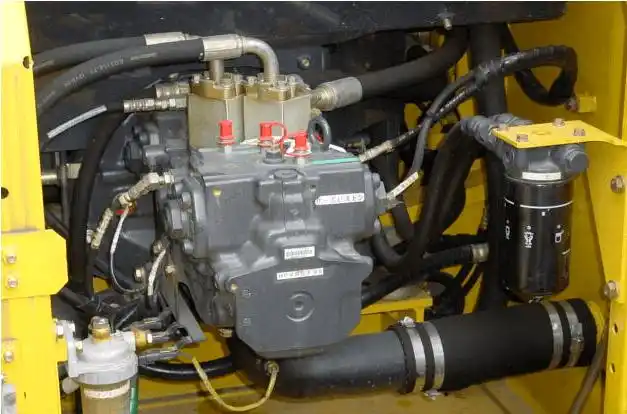
Komatsu utilizes the CLSS hydraulic architecture, governed primarily by two interacting control valves mounted on the main pump:
[Joystick Command] ──> [LS Valve Adjusts Pump Flow] ──> [Match Demand]
[High System Load] ──> [PC Valve Truncates Flow]    ──> [Prevent Engine Stall]
- PC Valve (Engine Load Control): Regulates pump displacement based on main pump delivery pressure to prevent the hydraulic system from exceeding engine output torque. If the PC valve sticks, the machine may either feel permanently sluggish (locked in minimum flow) or stall the engine with heavy black smoke when sudden load is applied.
- LS Valve (Load Sensing Response): Adjusts pump flow according to operator joystick input (spool differential pressure). If the LS valve or its differential pressure feedback lines are blocked or leaking, the pump will remain at minimum stroke regardless of joystick command.
👨🔧 Technician's Final Takeaway
In heavy equipment field service, your pressure gauge represents your eyes, and the hydraulic schematic is your roadmap.
Before unbolting heavy control valves or replacing expensive components, always take five minutes to thread a pressure gauge into the primary pilot port and main relief ports. Isolating flow issues from pressure loss will instantly cut your troubleshooting time in half and save your customers from unnecessary repair costs.
FAQ
Q1: Why is my Komatsu excavator weak and slow in all operations?
A: When all operations are simultaneously weak and slow, the issue is typically in a shared component. The primary causes are insufficient primary pilot pressure (below 3.8 MPa), a misadjusted or sticking main relief valve, or severe internal wear in the main pump (valve plate/cylinder block).
Q2: How can I tell if my Komatsu excavator's low power is an engine issue or a hydraulic issue?
A: Observe the engine under load. If the engine runs freely without dropping RPM or bogging down, it is a hydraulic flow or control issue (e.g., stuck PC/LS valve). If the engine stumbles, drops RPM significantly, or emits heavy black smoke, the engine is functioning, but the hydraulic pump is overloading it.
Q3: What is the normal primary pilot pressure for a Komatsu excavator?
A: Standard primary pilot pressure on most Komatsu excavators typically ranges between 3.8 MPa and 4.5 MPa at high idle. If pressure drops below this range, check the pilot pump and the self-reducing valve (Prs valve) for internal wear or spring fatigue.
Q4: Why does my excavator arm or boom drop/drift when the lever is in neutral?
A: Boom or arm drift on a single function indicates a branch circuit failure, not a main system issue. Common causes include damaged cylinder piston seals (internal bypass), a leaking overload/port relief valve on that specific circuit, or a binding main control valve spool.
Q5: What does the PC valve do on a Komatsu hydraulic pump?
A: The PC (Pressure Compensation) valve regulates main pump displacement according to delivery pressure to prevent the hydraulic load from exceeding the engine's available horsepower. A faulty PC valve can cause the machine to remain stuck in low flow or cause the engine to stall under load.
Request Technical Blueprints & Factory Quotes
Submit your machinery parameters below. Connect directly with verified, certified heavy industrial manufacturers to receive custom foundation drawings, layout schematics, and direct-from-factory pricing.