
Concrete Pump Market to Reach $8.06 Billion by 2032: Key Growth Drivers and Industry Shifts
Driven by rapid urbanization, infrastructure renewal, and smart city projects, the global concrete pump market is projected to surpass $8.06 billion by 2032.

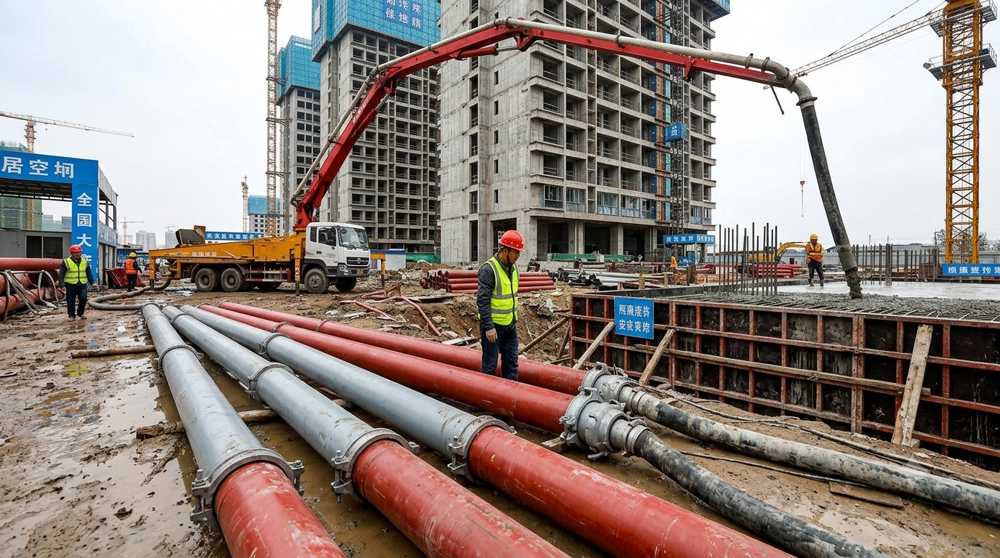
The global concrete pump market is demonstrating solid momentum, with recent technical reports and industry evaluations projecting its value to reach $8.06 billion by 2032. Valued at approximately $5.18 billion in 2023, the market is set to expand at a steady Compound Annual Growth Rate (CAGR) of 5.03% between 2024 and 2032.
This sustained expansion highlights a structural shift in global construction methodology, driven by rapid urbanization, large-scale infrastructure mandates, and the rising standards of smart city development.
Primary Drivers Behind Market Expansion
1. Accelerating Urbanization
In rapidly growing economies across Asia-Pacific and Latin America, rural-to-urban migration continues at an unprecedented pace. The resulting demand for high-density residential towers and commercial hubs requires continuous, high-volume concrete placement that traditional crane-and-bucket systems cannot efficiently match.
2. Strategic Infrastructure Renewal
Governments worldwide are funneling substantial capital into critical transport and utility networks—including highway bridges, transit tunnels, maritime ports, and airport terminals. These heavy-civil applications depend heavily on high-pressure, high-capacity concrete pumping systems capable of maintaining structural integrity over long distances.
3. The Rise of Smart City Standards
Modern urban centers demand cleaner, quieter, and more localized construction processes. Smart city initiatives emphasize minimal traffic disruption, reduced site footprints, and verifiable carbon auditing. High-efficiency pumping solutions align directly with these modern urban logistics requirements.
Technical Innovation: Remote Control and Sustainability
Industrial equipment job sites are undergoing rapid digital transformation. Today’s concrete pumps incorporate advanced telemetry and automation that fundamentally alter field operations:
- Precision Remote Operation: Wireless joystick controllers and electro-hydraulic boom controls allow operators to direct placement with centimeter-level precision. This improves safety in complex pours and significantly reduces manpower needs around the discharge point.
- Energy Efficiency & Emission Control: Manufacturers are re-engineering hydraulic circuits, incorporating variable-displacement pumps, and transitioning toward hybrid or fully electric power units. These changes significantly reduce job-site fuel consumption and fulfill strict municipal environmental standards.
Equipment Segment Breakdown
| Pump Type | Primary Construction Role | Operational Advantage |
|---|---|---|
| Truck-Mounted (Boom Pumps) | High-rise building and urban infrastructure | Exceptional mobility, rapid setup, and flexible boom reach. |
| Stationary (Line/Trailer Pumps) | Mega-structures, tunnels, and deep foundations | Continuous high-pressure delivery over long distances or extreme heights. |
| Specialized Pumps | Mining, underground caverns, and shotcreting | Custom mountings engineered for restricted access or harsh environments. |
Regional Dynamics: North America vs. Emerging Markets
- North America: Backed by federal infrastructure spending and ongoing urban modernization, the U.S. remains a high-value market focused on advanced, high-reach boom trucks and telematics-enabled fleets.
- Asia-Pacific: Serves as the primary volume driver. Rapid expansion in transit infrastructure and mega-city development across India, Vietnam, and Indonesia continues to fuel high demand for both stationary and truck-mounted machinery.
Industry Outlook
The projected growth through 2032 reflects more than just increased construction volume; it demonstrates an industry-wide transition toward precision, efficiency, and sustainability. As project schedules tighten and urban working envelopes shrink, advanced concrete pumping technology remains an essential pillar of modern civil engineering.
Request Technical Blueprints & Factory Quotes
Submit your machinery parameters below. Connect directly with verified, certified heavy industrial manufacturers to receive custom foundation drawings, layout schematics, and direct-from-factory pricing.