
Sourcing an HZS120 Concrete Batching Plant: 2026 CAPEX & Technical Specifications
A B2B procurement breakdown detailing initial capital expenditures, structural concrete foundation engineering, and OPEX metrics for HZS120 concrete plants

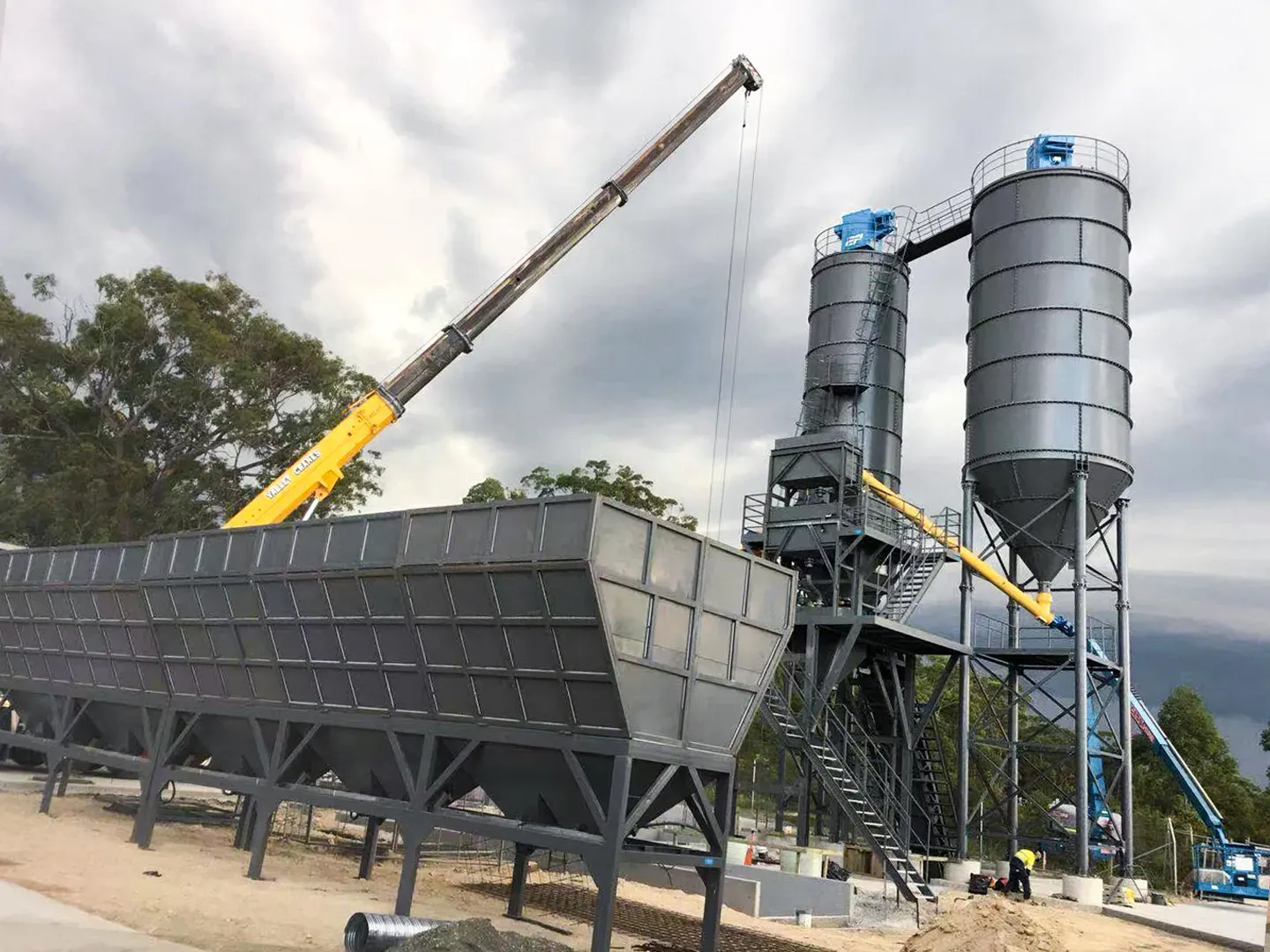
Strategic Capital Allocation & Production Dynamics
In the commercial ready-mix concrete (RMC) and mega-infrastructure development sectors, commissioning an HZS120 Stationary Concrete Batching Plant represents a major capital investment. Delivering a nominal production output velocity of 120 m³/h, this belt-fed industrial tower moves past the limitations of smaller skip-hoist setups. It leverages a continuous inclined conveyor belt matrix to rapidly transport aggregates up to the secondary storage hoppers, ensuring lightning-fast batch turnaround times.
However, a systemic point of failure among procurement teams is evaluating an HZS120 acquisition strictly on the machinery's factory sticker price (FOB export shipping gates).
An HZS120 line is a massive high-vibration structural system. Investors must accurately model the total capital expenditure (CAPEX) footprint—including non-recoverable subsurface civil engineering foundations, heavy multi-megawatt high-voltage transformer grids, ocean freight logistics, and strict localized environmental dust-encapsulation cladding.
This strategic sourcing blueprint breaks down the exact capital allocations, mechanical component lineages, and quantitative return on investment (ROI) metrics required to successfully deploy an HZS120 station.
Granular Capital Expenditure (CAPEX) Breakdown
To secure a stable cash runway during site mobilization, your asset modeling sheets must account for four independent investment layers based on current market benchmarks.

1. Primary Tower Machinery Assets (FOB Export Gates)
The core machinery bundle encompasses a heavy-duty 2.0 m³ horizontal compulsory twin-shaft mixer host (driven by dual 37 kW or 45 kW electric motors), a 4-compartment aggregate batching unit with independent scale hoppers, an inclined chevron belt conveyor system, a dual-PC synchronous SCADA operator cabin, and triple 150-ton bolted cement silos equipped with automated pulse dust venting bags. The baseline factory capital layout spans $115,000 to $165,000 USD depending on component lineage configurations.
2. Civil Foundation Engineering & Grid Substation Installation
Because the HZS120 tower houses a 2.0 m³ mixer cycling up to 3,000 kg of aggregate per batch, the structural dynamic vibration vectors are immense. Excavating, pouring the reinforced C30/C35 structural concrete pad anchoring grids, and constructing high steel-mesh aggregate batcher retaining walls demands an unrecoverable capital budget of $28,000 to $45,000 USD.
Furthermore, pulling a dedicated 200 kW to 250 kW high-voltage electrical utility transformer line to the site adds an extra localized infrastructure connection fee of $12,000 to $20,000 USD.
3. Auxiliary Material Handling Fleet (Logistical Assets)
An HZS120 plant cannot operate in isolation. Moving raw sand and delivering the mixed slurry requires massive supporting capital allocations:
- Heavy Duty Wheel Loader (5-Ton Operating Capacity): Mandatory for pushing aggregates into the underground batching hoppers ($38,000 – $65,000 USD used/new tier-1).
- Transit Mixer Trucks (10 m³ to 12 m³ Capacity): To handle the high volumetric output of an active HZS120, a starter fleet of at least 4 to 6 heavy-duty transit mixer units requires an allocation of $140,000 to $240,000 USD.
HZS120 Technical Specification & Operating Boundaries
The metrological specification matrix below outlines the strict physical parameters, electrical capacities, and weighing limits required to verify an HZS120 plant's contract performance.
| Architectural Node / Sub-System | Target Engineering Specification | Critical Compliance Threshold | Precision Calibration Metric |
|---|---|---|---|
| Mixer Host Volumetric Capacity | 2.0 m³ Compressed Concrete Per Batch | Under-Volume Cycle (Blade Wear Delta) | Physical Batch Volume Scaling |
| Total Electrical Power Grid Load | 210 kW to 240 kW Peak Draw | < 180 kW Supply (Transformer Trip) | True-RMS Digital Power Meter |
| Aggregate Scale Weighing Target | ±2.0% Maximum Allowable Error | > ±3.0% (Automated Cycle Halt) | 17-4 PH Strain Gauge Load Cells |
| Cement / Water Scale Precision | 正式规定 ±1.0% System Variance | > ±2.0% (Batch Recipe Rejection) | 3-Point Automated Span Calibration |
| Pneumatic Header Line Pressure | 0.65 MPa to 0.85 MPa (6.5-8.5 bar) | < 0.55 MPa (Discharge Jam Alarm) | Glycerin-Damped Line Gauge |
Quantitative ROI Modeling & Payback Trajectory
To evaluate project visibility for institutional lenders or private ready-mix yard investors, corporate procurement managers map volumetric output metrics against a localized margin analysis.
[ Annual Net Cash Inflow ]Yearly ROI = ─────────────────────────────────────────── × 100%[ Total Initial Sourcing Capital Invested ]
Real-World Operating Scenario: Sourcing an HZS120 Yard
- Target Growth Zone: Rapidly developing metropolitan corridor (e.g., Southeast Asia or Middle East infrastructure links).
- Average Regional Market Selling Price of RMC: $82.00 USD per m³.
- Raw Material + Labor OPEX (Cement, Sand, Admixtures, Water, Diesel, Utility Power): $66.00 USD per m³.
- Net Operating Profit Margin: $16.00 USD per m³.
- Plant Utilization Factor: Running at a realistic 50% capacity factor over an active 10-hour shift yields a daily output of 600 m³.
- Annual Volume Scaling (260 Active Working Days): $600 \text{ m}^3 \times 260 = 156,000 \text{ m}^3 \text{ per annum}$.
- Total Annual Cash Inflow: $156,000 \text{ m}^3 \times $16.00 \text{ USD} = \mathbf{$2,496,000 \text{ USD}}$.
Under this highly realistic financial profiling, an initial total project execution investment of $365,000 USD (encompassing core HZS120 tower machinery, sea shipping freight container logistics, local deep civil foundation grid construction, and transformer utility setup) completely recovers its entire capital layout within 2.1 to 3.5 months of live site commissioning.
Strategic Procurement Risk Mitigation Directives
To protect your capital and preserve these rapid payback margins, your procurement team must enforce three specific operational safeguards in the final factory purchase contract:
- Dual-PC Synchronous SCADA Redundancy: For the main control cabin, mandate a dual-computer synchronous SCADA system. If Industrial PC A experiences an unexpected mother-board crash or hard-drive failure mid-pour, Computer B must instantly execute a millisecond automated hot-swap takeover. This keeps the active batching line data live, preventing concrete from setting inside the 2.0 m³ mixing drum.
- Chevron Belt Structural Encapsulation: Sourcing contracts must state that the main inclined aggregate conveyor belt must feature a complete structural steel hood enclosure with an integrated lower collection tray. This prevents high winds from blowing fine sand dust into local environmental zones, satisfying green building mandates, and blocks heavy rainwater from pooling in the aggregate pockets, which would unbalance the mix's water-to-cement ratio.
- Variable-Frequency Mixer Drive Ready: Ensure the primary 37 kW twin mixing motors are linked to heavy-duty variable-frequency drives (VFDs). Running standard ready-mix concrete requires a standard 50 Hz mixing velocity, but processing specialty high-strength polymer or ultra-dry fiber concrete requires altering shaft RPM speeds to prevent fiber balling and optimize motor torque delivery.
FAQ
Q1: Why should a procurement manager specify a skip-hoist plant (like HZS60) over an inclined belt-fed plant (like HZS120) if land area is constrained?
A1: Sourcing teams must evaluate their physical job site boundaries before choosing a plant style. An HZS120 inclined belt-fed plant requires a long horizontal site layout footprint (often exceeding 60-80 meters) because the aggregate conveyor belt must maintain a gentle 18° to 22° incline slope angle to prevent stones from rolling backward down the line. If the job site is constrained within a tight urban or mountainous footprint, a skip-hoist plant configuration (like the HZS60) is preferred. Skip-hoist systems hoist aggregates vertically up a steep 60-degree steel track, reducing the plant's total structural footprint by up to 50%, though it limits maximum output capacity to 60 m³/h.
Q2: How does material wear life differ between cast-iron tiles and polyurethane liner inserts inside the aggregate collection hoppers?A2: Sourcing teams must specify hopper lining materials based on aggregate abrasiveness. Standard cast-iron wear liners offer high impact resistance but wear down fast under fine quartz sand abrasion, requiring replacement every 40,000 batches. Upgrading the factory contract to mandate premium polyurethane wear liner inserts (with a shore hardness exceeding 90A) lowers your long-term operating costs (OPEX). Polyurethane provides a low friction coefficient that prevents wet sand from sticking and caking to the hopper walls, and outlasts standard steel linings by up to 300% in high-abrasion environments.
TAG
HZS120 concrete batching plant capital cost,belt fed stationary concrete plant specifications,HZS120 vs HZS60 concrete plant footprint layout,twin shaft 2m3 concrete mixer procurement,ready mix concrete factory asset investment ROI,concrete batching plant,concrete plant,HZS120 cost
Request Technical Blueprints & Factory Quotes
Submit your machinery parameters below. Connect directly with verified, certified heavy industrial manufacturers to receive custom foundation drawings, layout schematics, and direct-from-factory pricing.